सामग्रीको तालिका
सिंचाई पाइप बिछ्याउँदा, तिनीहरू अक्सर भूमिगत गाडिएका छन्. पाइपहरू गाड्नाले तिनीहरूलाई कडा घाममा पर्न वा चिसोको कारण क्र्याक हुनबाट मात्र रोक्दैन तर सतह खेती गतिविधिहरूलाई पनि सहज बनाउँछ।, पाइपहरूको आयु अधिकतम गर्दै.
त्यसैले, सिँचाइ पाइपहरू कति गहिराइमा गाड्नु पर्छ? वास्तवमा, यो जलवायु जस्तै विभिन्न कारक मा निर्भर गर्दछ, भू-भाग, माटो प्रकार, पाइप प्रकार, र थप. यो पोस्टले तपाईंलाई विस्तृत जवाफ प्रदान गर्नेछ.
जलवायु

विभिन्न ठाउँमा हावापानी फरक फरक हुन्छ, त्यसैले सिँचाइ पाइपको गाड्ने गहिराइ पनि फरक हुन्छ.
चीनलाई उदाहरणको रूपमा लिनुहोस्, पूर्वी र दक्षिणी क्षेत्रहरूमा अपेक्षाकृत हल्का तापमान छ, र जाडोमा जमेको माटोको तह विरलै हुन्छ; तापक्रम विरलै शून्य डिग्री सेल्सियसभन्दा तल झर्छ. अत, सिंचाई पाइप बिछ्याउँदा, there is generally no need to consider frost protection. The burial depth of irrigation pipes should be greater than 40 centimeters (about 16 inches), which can protect the pipes while not interfering with surface farming operations.
If the farmland is large and large agricultural machinery (such as seeders, harvesters, आदि) is frequently used, then burying the pipes at a depth of 50–60 centimeters (about 20–24 inches) is also entirely sufficient. तैपनि, it is necessary to evaluate the soil’s bearing capacity; sometimes, to prevent ground collapse caused by heavy machinery, foundation reinforcement is needed.
In the northeastern region of China, winters are very cold, with average temperatures sometimes falling below minus 15 degrees Celsius. If the pipes are buried too shallowly, they may be at risk of freezing and cracking. अत, the burial depth of pipes needs to be below the frost line, generally reaching 150 centimeters (about 59 inches) or more.
Terrain

Different terrains require different burial depths for irrigation pipes. उदाहरण को लागी, in flat plains, the terrain is level, so generally the supply pipes can be buried at a depth of 40–50 centimeters (about 16–20 inches). तैपनि, in mountainous areas where the terrain is rugged and complex, the pipe laying depth needs to be evaluated comprehensively based on the terrain, installation difficulty, cost, and other factors.
Soil Types

Common soil types in agriculture include loam and sandy soil. The burial depth of irrigation pipes varies between these two soil types.
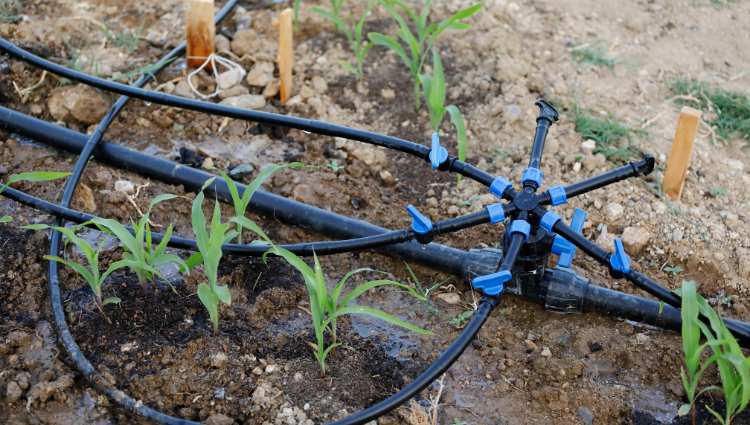
Taking drip tape as an example: it generally needs to be shallowly buried. In loam soil, which has good water retention, nutrient retention, and aeration, drip tape is usually buried shallowly at a depth of 2–4 centimeters (about 0.8–1.6 inches).
If the soil is sandy or contains a high sand content, the drip tape needs to be buried slightly deeper, generally at 3–5 centimeters (about 1.2–2.0 inches).
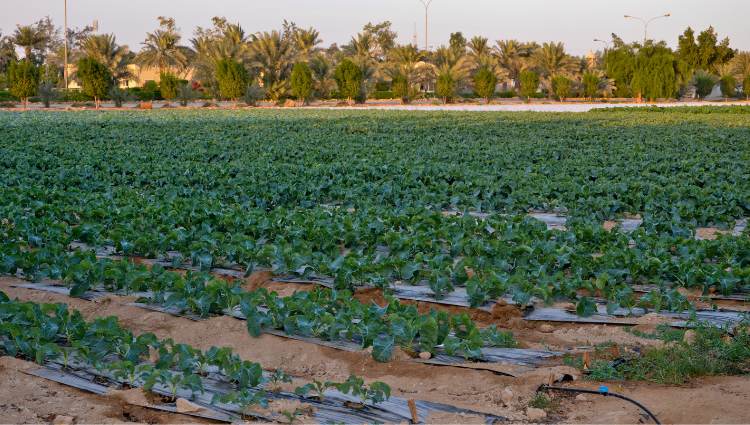
Additionally, it is worth mentioning that sometimes in fields using drip tape irrigation, mulch film is applied. In this case, with the protection of the film, the drip tape only needs to be buried very shallowly, at a depth of 1–2 centimeters (about 0.4–0.8 inches).
Pipe Types

Irrigation pipes are usually divided into main pipes and branch pipes. The main pipes are typically made of PVC or PE. Their material is relatively rigid and their size is larger; depending on the region and terrain, they are generally buried within a range of 30–100 centimeters (about 12–39 inches).
In drip irrigation systems, the branch pipes are often driplines or drip tapes. These can be laid directly on the soil surface or shallowly buried just a few centimeters underground. Because driplines and drip tapes have emitters, when buried underground they need to avoid clogging and thus should not be buried too deep.
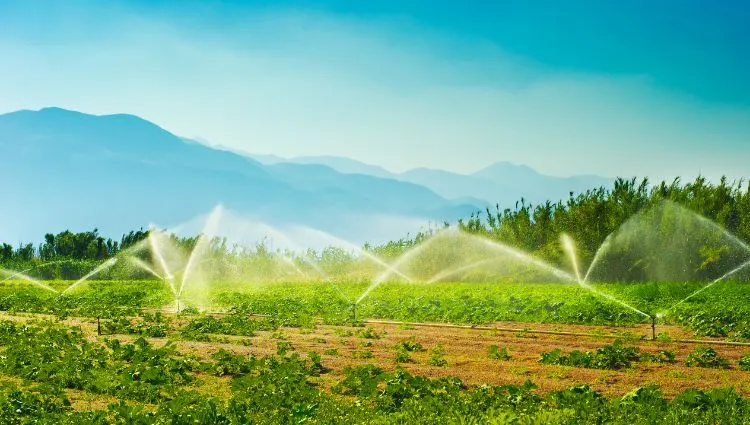
In sprinkler systems, engineers can flexibly determine the burial depth according to actual needs. उदाहरण को लागी, with pop up sprinklers, the sprinkler heads are retractable and need to remain flush with the ground surface. Workers can calculate the required burial depth based on this characteristic.
Furthermore, for sprinklers with risers, engineers need to select the burial depth based on the desired spraying effect (such as lift height and radius) as well as the actual climate and terrain. सामान्यतया, a burial depth between 30 centimeters (about 12 inches) र 100 centimeters (about 39 inches) is suitable.
By reading this article, you should already understand that the burial depth of irrigation pipes is influenced by many factors. वास्तवमा, there is often no fixed answer. You can assess the depth based on your actual situation, considering factors such as climate, भू-भाग, पाइप प्रकार, माटो प्रकार, र यस्तै.
तैपनि, it is also important to note that the deeper the pipe is buried, the better is not always true. Greater depth not only makes maintenance and replacement more difficult but also increases costs significantly. When you actually lay the pipes, just take all these factors into account and find a balance.
अन्तिम शब्दहरू
अन्तमा, कृपया मलाई हाम्रो कम्पनी यहाँ परिचय गराउन अनुमति दिनुहोस्. वर्षाफुन भनेको चीनमा सिंचाई उत्पादन निर्माता मुख्यालय हो. पाइप सामग्री र फिटिंगहरू हाम्रा मुख्य उत्पादनहरू हुन्, लगायत PVC पाइप र फिटिंग, BSP थ्रेड पाइप र फिटिंग, पीपी फिटिंग, समतल नलीहरू राख्नुहोस्, ड्रिपलाइनहरू, ड्रिप टेपहरू, र थप. जानकारी पाउन सक्नुहुन्छ Rainfaun को बारेमा र हाम्रा उत्पादनहरू यस वेबसाइटमा.
यदि तपाईं हामीलाई सहयोग गर्न चाहानुहुन्छ भने, तपाईं सक्नुहुन्छ यहाँ क्लिक गर्नुहोस् फारम भर्न.
लेखिका: माइवेएलको
सम्पादक: माइवेएलको
सामग्री समीक्षाकर्ता: माइवेएलको